Cabbage
Brassica oleracea var. capitata
Family: Brassicaceae · Genus: Brassica
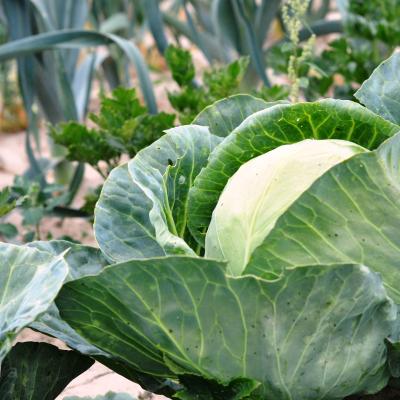
Cabbage is a leafy biennial vegetable in the brassica family, grown as an annual for its dense leafy heads. Available in green, red, and savoy varieties, it is a staple crop in temperate climates worldwide. Native to the Mediterranean.
Soil Temperature
5°C – 18°C
Spacing
50 – 75 cm
Harvest
11–15 weeks
Sowing
Grow in seed trays, and plant out in 4 weeks.
Growing Schedule Zone 8b
Companions
Avoid Growing Near
Growing Notes
There are many varieties of cabbage. Those which stand winter weather usually have darker leaves and a stronger flavour, e.g. Savoy. Red cabbage is grown in a similar way to green varieties. In temperate climates if you plant a selection of types you can have cabbage growing all year round.
Culinary Hints
Young spring cabbage can be chopped and added to salad greens. Steaming preserves the goodness and flavour of cabbage. Can also be used in stir-fry. Red cabbage chopped and cooked with brown sugar, red wine, onions, vinegar and stock is served with boiled bacon or pork.