Swiss Chard
Beta vulgaris var. cicla
Family: Amaranthaceae · Genus: Beta
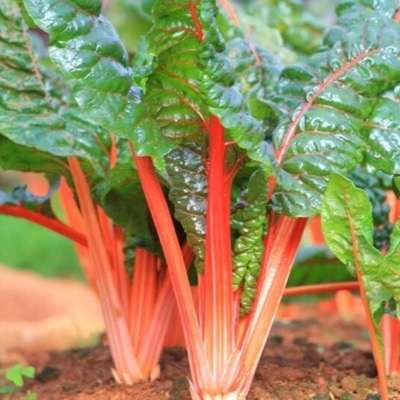
Swiss chard, also known simply as chard or silverbeet, is a leafy vegetable in the amaranth family grown for its large glossy dark green leaves and broad edible stalks in white, yellow, red, or orange. A cut-and-come-again crop tolerant of both heat and frost, 'Orange Glory' is an orange-stalked variety. Chard and beets are the same species, selected for leaves rather than roots.
Soil Temperature
10°C – 30°C
Spacing
15 – 30 cm
Harvest
7–12 weeks
Sowing
Easy to grow. Sow in garden.
Growing Schedule Zone 8b
Companions
Avoid Growing Near
Growing Notes
Edible dark green glossy leaves with wide white or cream stalks produced over a long period. Some varieties have red, yellow or orange stalks. They are all edible. Both leaves and stalks are eaten. This is a cut and come again plant, providing leaves for some months before going to flower. Can re-sprout from around the base if cut off when it starts to flower. Reasonably frost and heat tolerant. Grows well in most soils. For prolific growth apply compost, or well-rotted manure. Resistant to most plant diseases. The multi-coloured ones look good in a flower border.
Culinary Hints
Wash thoroughly and inspect the back of the leaves for insects. Chop and put in a saucepan with very little water (or just what is on the leaves). Cover and cook over a low to medium heat until the leaves collapse. A small amount of nutmeg enhances the flavour.